
I’ve spent the last months going back and forth between data visualization with Tableau and AI assisted coding and development. Beyond the ‘vibes’, I continue to be curious about the AI engineer path and the possibilities that lie there. I realize that some would say that it’s not necessary for it to be an either/or situation. However, if I want to truly develop my skills in either one, splitting my time evenly with both is not going to be effective or a smart use of my limited time.
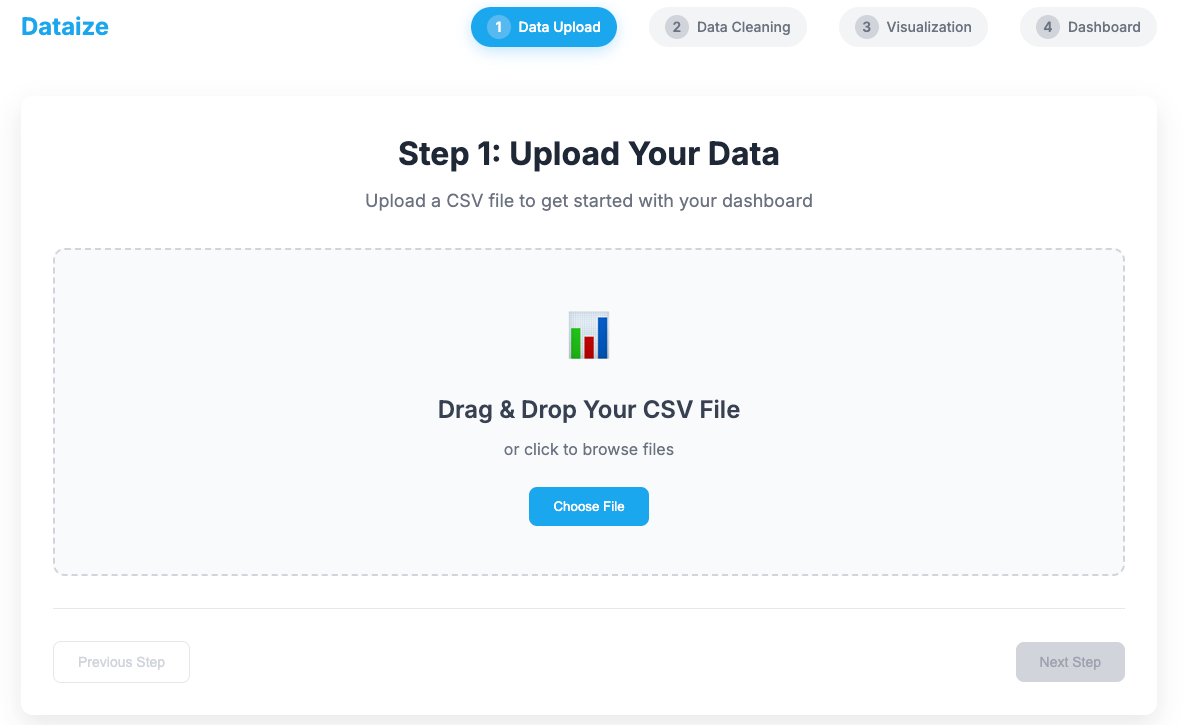
I explored the “AI-Assisted Coding for Developers and the “Software Development with Winsurf courses and took Build with AI: Create a Data Analytics Dashboard with Lovable but instead of using Lovable (Way too Vibey?!), I utilized the prompts, tweaked them and built it using Claude Code in Cursor. I built the Dataize application via this route and it functioned and wasn’t too bad. I got steps 1-2 (Data Upload + Data Cleaning) to work but the visualization and dashboard was a bit wonky. A good start nonetheless.
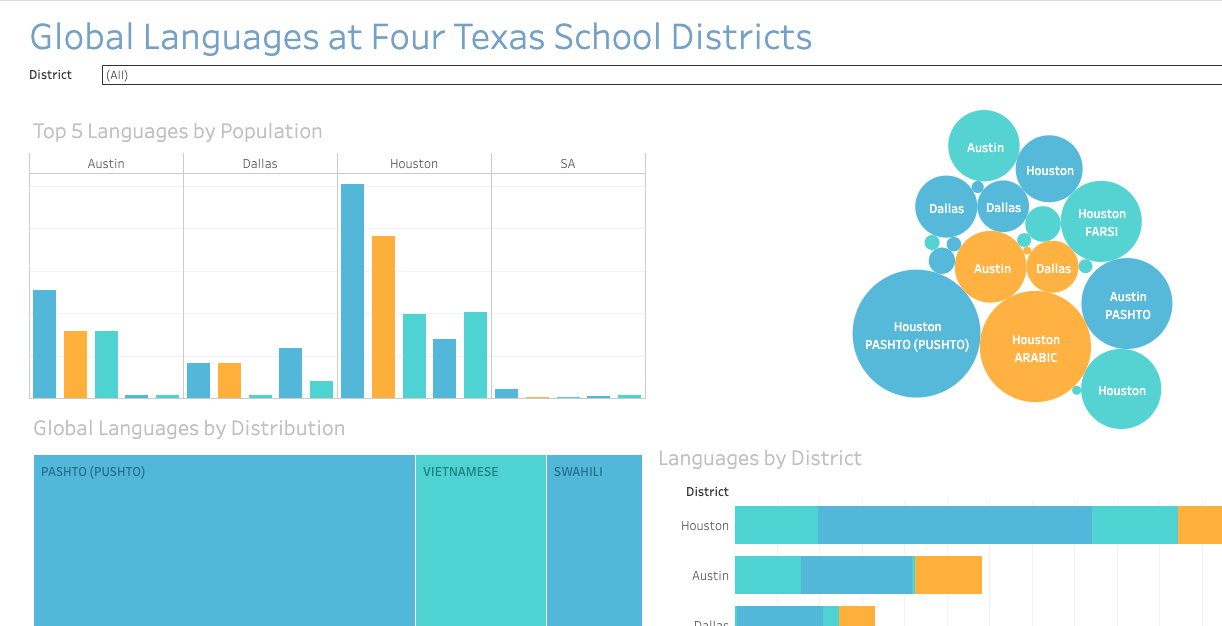
I also completed the Creating Dashboards in Tableau on Datacamp and the Creating Interactive Tableau Dashboards on LinkedIn. Although not full dashboards, I did create two Tableau projects from this. First, a visualization of the the global languages at four Texas school districts.
At this point, I’ve come to the conclusion that pursuing both paths at the same level of commitment prevents me from developing deep expertise in either. When it comes to Tableau, I genuinely enjoy data visualization and the tool itself. That said, its largely proprietary nature gives me pause. Compared to the flexibility of tools like D3, Tableau requires a significant investment in learning click-driven workflows that keep me tightly bound to a single company’s ecosystem. For me, this constraint contributes to an experience that often feels clunky and limiting.
In contrast, the path of AI-assisted development—and potentially AI engineering—offers far greater flexibility and opportunity. My interests in data visualization, design, and user interactivity remain highly relevant and transferable within this path.
I’m beginning to gain clarity on what my focus needs to be moving forward.