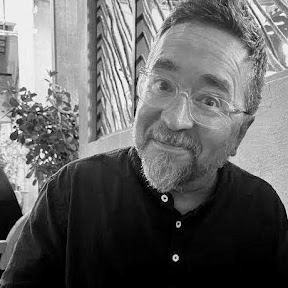
As a lifelong public school educator—English Language Arts (ELA) teacher, Individualized Learning Specialist, RtI Coordinator, Campus Technologist, ESL/LPAC Coordinator, Critical Student Intervention Coordinator, and Dean of Instruction—I have worked extensively with data throughout my career. I have also struggled with the use of data and, most importantly, the concpept of a data driven education model. Not only is it not as simple as it is sold, it can also be terribly misguided when the proper questions are not asked or considered from the start.
Early in my professional journey, I earned a Master of Education in Curriculum and Instruction and became a state-certified Master Technology Teacher. Working with data is both a passion and a challenge for me. I believe that meaningful, actionable insights can be taken from data to solve real-world problems in classrooms, schools, districts, and state policy. However, working with data can also be complex and even confusing; even the cleanest looking data can mislead if not approached critically from the start. I’ve learned that “data-driven” is not a silver bullet for education, and failing to ask the right questions about data can and does lead to unintended consequences.
My practical experience and desire to think more critically and thoughtfully about the use of data in education inspired me to bridge these fields. To accomplish this, I earned a Master of Science degree in Advanced Data Analytics. Through this program, I gained hands-on experience in statistical analysis using Python and Excel, interactive data visualization with Tableau and Plotly, and evaluating machine learning models (such as linear and logistic regression, decision trees, and random forests) in Jupyter Notebooks and Google Colab.
My extensive background in K–12 public education coupled with my exposure and education in data wrangling and analysis enables me to bring a unique, grounded perspective to the intersection of these two fields.